Premium Polynesian Spirit — Est. 1947
Fenua
Noa
Island Rum · Rhum Agricole
Some bottles carry rum. This one carries a story the sea refused to let disappear.
Origin undisclosed · French Polynesia · Production unknown
Some bottles carry rum. This one carries a story the sea refused to let disappear.
In 1947, a Polynesian navigator named Teva Noa was given up for dead. His vessel had gone missing in the open Pacific for ten days. Search parties found nothing. His friends performed the rites. The island mourned.
On the tenth day, Teva walked ashore at a port he had never visited, in clothes that were dry, carrying nothing but an old unlabeled bottle with what appeared to be an aged map rolled up inside it. He never spoke about where he had been. He never spoke about the ten days. What he did speak about, quietly and only to those who asked the right questions, was what he had been shown.
He was a different man. Not broken by whatever had happened out there. The opposite. He laughed more easily than anyone his friends had ever known. He started a family. He pulled people toward him without trying. Those who spent time around Teva described the experience the same way, regardless of when they had known him: like standing next to something warm that had no obvious source.
The distillery came next. Built on land whose location he never registered with any colonial authority. The first bottles appeared without announcement. Word spread the way word spreads on islands: slowly, then everywhere at once. Those who tasted it described something they could not place. Not a flavor exactly. More like a memory of a place they had never been.
Teva Noa passed in the year 2000. What he left was the process, committed to no paper, carried only by those he had chosen to carry it. His heritage lives on in every bottle.
What we know: the cane is harvested by hand, always at dusk, always within hours of distillation. The water source has been tested and returned results the laboratory could only describe as a purity that has no earthly explanation. The barrels arrived with Teva in 1947 and have never been replaced, only tended.
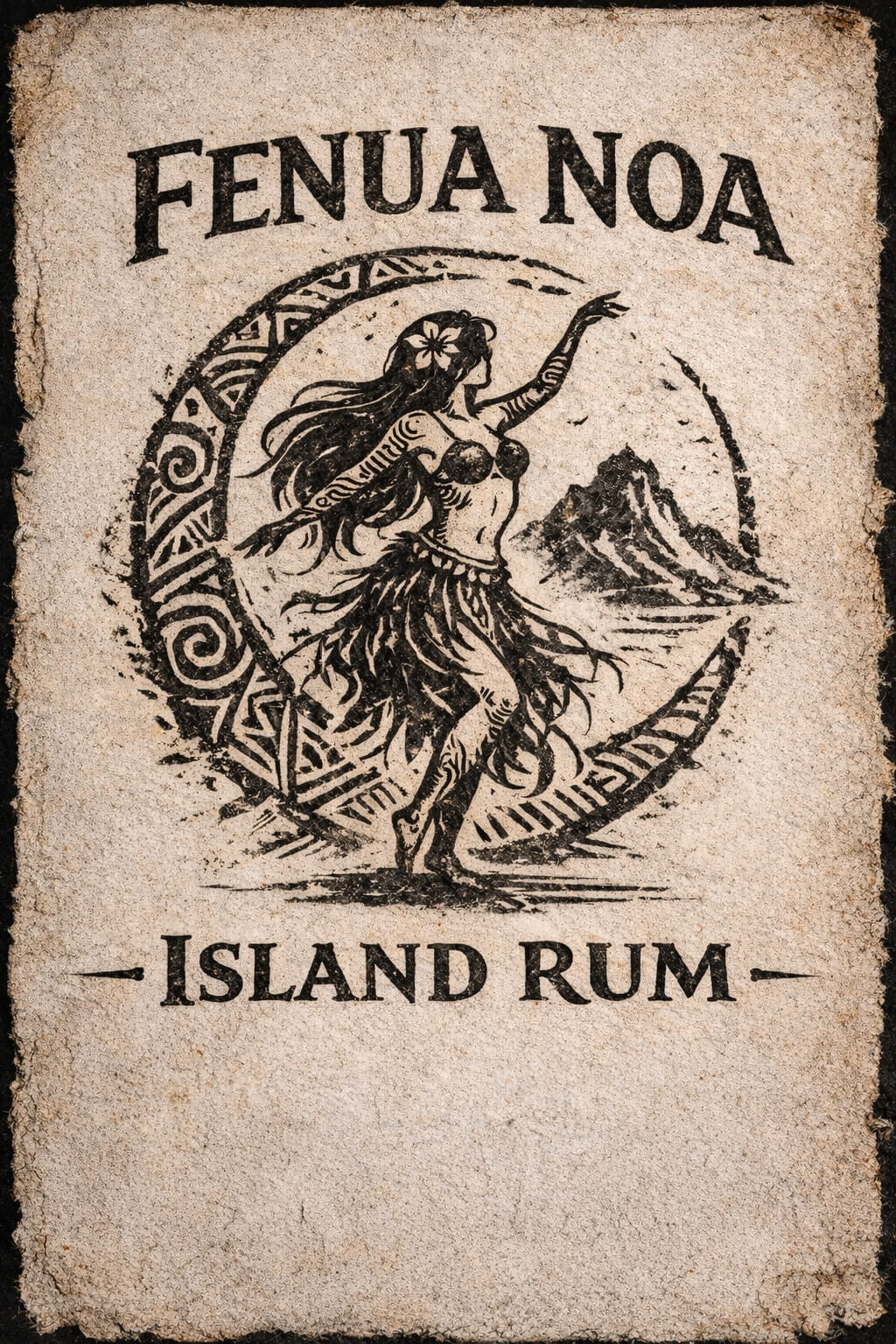
What we do not know: why the flavor varies slightly from bottle to bottle in ways that feel intentional. Why the label, which Teva drew himself, depicts a figure that several people across several decades have independently claimed to recognize. Why some bottles arrive at their destination with the wax seal already warm.
We bottle by hand. We number each bottle. The rest, as Teva always said, belongs to the tide.
The tide does not ask permission. It arrives when it arrives, and it brings what it decides to bring, and the only mistake you can make is to assume it is finished.